Minas Gerais
From the gold cycle to the global avant-garde
A journey that joins colonial Brazil, the wealth of the gold cycle, the genius of modernism and the global avant-garde of contemporary art — from Ouro Preto and Congonhas to Inhotim and Niemeyer's Pampulha.
Belo Horizonte, the first planned city in Brazil, opens the route. The Pampulha Modern Ensemble — Oscar Niemeyer's first large-scale project, with gardens by Burle Marx, panels by Portinari and the little church of São Francisco de Assis — unconsecrated for 14 years for being considered too modern. A UNESCO World Heritage site since 2016. by Oscar Niemeyer has been a UNESCO UNESCO World Heritage — Fernando de Noronha has been a UNESCO Natural World Heritage site since 2001, alongside Rocas Atoll. Around 70% of the archipelago is a Marine National Park with strict preservation rules — that's why visitor numbers are limited and the experience is so exclusive. site since 2016 — the little church of São Francisco de Assis leading the way. Then the Mercado Central, Rua Sapucaí and Praça da Liberdade.
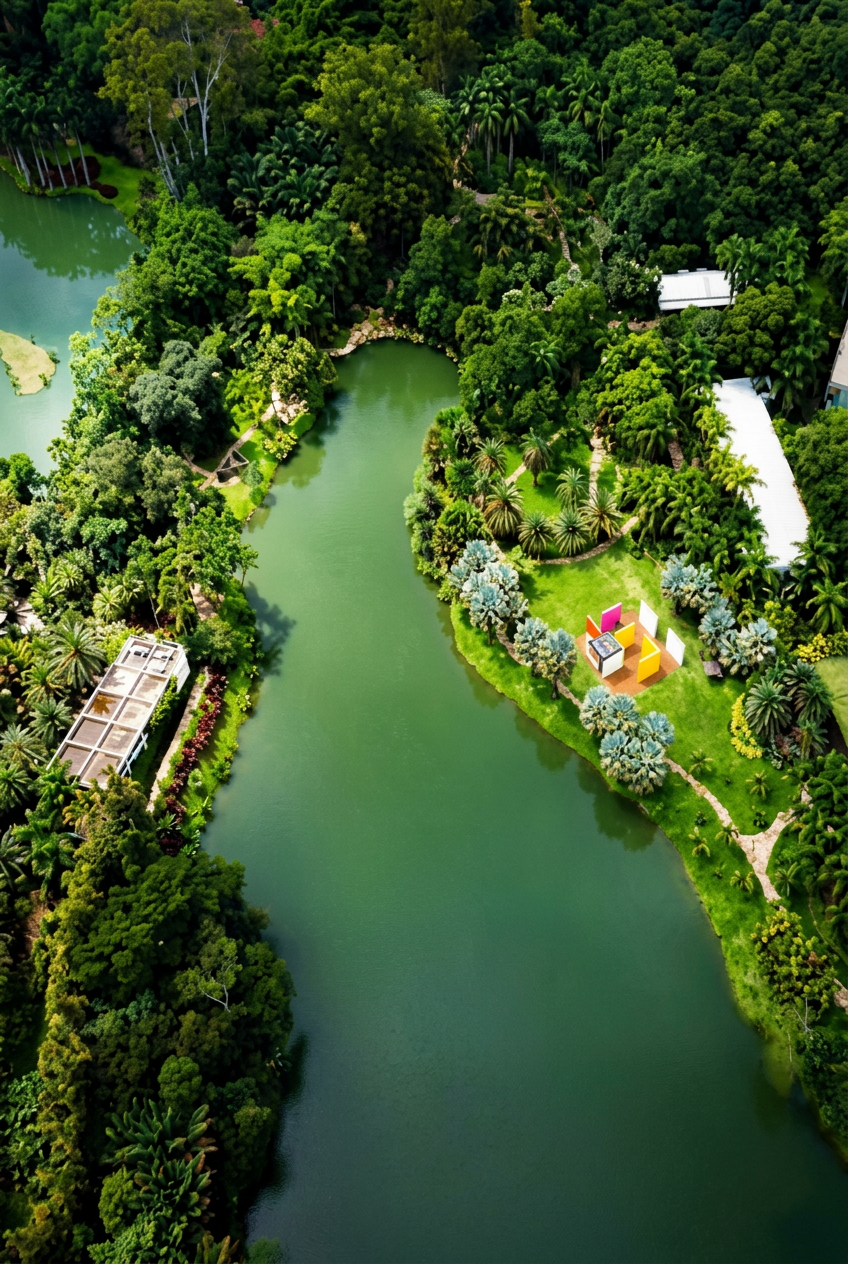
In Brumadinho lies Instituto Inhotim: the largest open-air contemporary art museum in the world, 140 hectares where works such as Inhotim Institute — The largest open-air contemporary art museum in the world: 140 hectares of botanical garden in Brumadinho, with permanent galleries by artists such as Yayoi Kusama, Adriana Varejão and Doug Aitken, set between Cerrado and Atlantic Forest. Recommended by The New York Times for 2026.'s live among Cerrado and Atlantic Forest. Recommended by The New York Times for 2026.
From galleries to mines. Ouro Preto was the first Brazilian city inscribed as a UNESCO UNESCO World Heritage — Fernando de Noronha has been a UNESCO Natural World Heritage site since 2001, alongside Rocas Atoll. Around 70% of the archipelago is a Marine National Park with strict preservation rules — that's why visitor numbers are limited and the experience is so exclusive. site, in 1980: birthplace of the 1789 Ouro Preto — The first Brazilian city inscribed as a UNESCO World Heritage site, in 1980. Birthplace of the 1789 Inconfidência Mineira, with stone slopes, gold-lined baroque churches and old mines you can walk into., baroque churches and old gold mines. In Congonhas, the Aleijadinho and the twelve prophets — Antônio Francisco Lisboa, known as Aleijadinho, carved the twelve soapstone prophets of the Sanctuary of Bom Jesus de Matosinhos in Congonhas after losing the use of his hands — with the tools strapped to his arms. A UNESCO World Heritage site since 1985. holds Aleijadinho's twelve prophets, UNESCO-listed since 1985. Mariana, the first capital of Minas, gathers around Praça Gomes Freire; Sabará, one of the state's oldest towns, keeps the Gold Museum in the 1730 Intendency House and its traditional Jabuticaba Festival.
Tiradentes and Bichinho close the route: a colonial ensemble protected by IPHAN since 1938, 18th-century distilleries, lacemakers, an Artisanal Minas cheese — A craft registered as Brazilian Cultural Heritage by IPHAN in 2008 and recognised by UNESCO in 2024: raw milk, natural starter and slow maturation. At the farm we visit you follow the production and taste cheeses of different ages alongside pot-still cachaça. farm, studios and folk art.
What the days look like
- Ouro Preto: first Brazilian city on the UNESCO World Heritage list (1980)
- Congonhas: Aleijadinho's twelve prophets (UNESCO, 1985)
- Niemeyer's Pampulha Modern Ensemble (UNESCO, 2016)
- Inhotim: the world's largest open-air contemporary art museum
- Tiradentes and Bichinho: colonial ensemble protected by IPHAN since 1938
Day-by-day itinerary
- Day 1Belo Horizonte (MG)
Belo Horizonte
The first planned city in Brazil. Mercado Central, Rua Sapucaí and Praça da Liberdade with a local guide.
- Day 2Pampulha
Pampulha Modern Ensemble
Pampulha Modern Ensemble — Oscar Niemeyer's first large-scale project, with gardens by Burle Marx, panels by Portinari and the little church of São Francisco de Assis — unconsecrated for 14 years for being considered too modern. A UNESCO World Heritage site since 2016.'s work, UNESCO UNESCO World Heritage — Fernando de Noronha has been a UNESCO Natural World Heritage site since 2001, alongside Rocas Atoll. Around 70% of the archipelago is a Marine National Park with strict preservation rules — that's why visitor numbers are limited and the experience is so exclusive. since 2016, with the little church of São Francisco de Assis.
- Day 3Brumadinho (MG)
Instituto Inhotim
The world's largest open-air contemporary art museum: 140 hectares between Cerrado and Atlantic Forest. Recommended by The New York Times for 2026.
- Day 4–5Ouro Preto (MG)
Ouro Preto
The first Brazilian city on the UNESCO UNESCO World Heritage — Fernando de Noronha has been a UNESCO Natural World Heritage site since 2001, alongside Rocas Atoll. Around 70% of the archipelago is a Marine National Park with strict preservation rules — that's why visitor numbers are limited and the experience is so exclusive. list (1980). Birthplace of the 1789 Inconfidência, Ouro Preto — The first Brazilian city inscribed as a UNESCO World Heritage site, in 1980. Birthplace of the 1789 Inconfidência Mineira, with stone slopes, gold-lined baroque churches and old mines you can walk into. and old mines.
- Day 5Mariana e Congonhas
Mariana and the prophets of Congonhas
Mariana, the first capital of Minas, and Praça Gomes Freire. In Congonhas, Aleijadinho's Aleijadinho and the twelve prophets — Antônio Francisco Lisboa, known as Aleijadinho, carved the twelve soapstone prophets of the Sanctuary of Bom Jesus de Matosinhos in Congonhas after losing the use of his hands — with the tools strapped to his arms. A UNESCO World Heritage site since 1985. (UNESCO World Heritage — Fernando de Noronha has been a UNESCO Natural World Heritage site since 2001, alongside Rocas Atoll. Around 70% of the archipelago is a Marine National Park with strict preservation rules — that's why visitor numbers are limited and the experience is so exclusive., 1985).
- Day 6Sabará (MG)
Sabará and the Gold Museum
One of the oldest towns in the state. The Gold Museum in the 1730 Intendency House, and the traditional Jabuticaba Festival.
- Day 7–8Tiradentes e Bichinho
Tiradentes and Bichinho
A colonial ensemble protected by IPHAN since 1938: 18th-century distilleries, lacemakers, an Artisanal Minas cheese — A craft registered as Brazilian Cultural Heritage by IPHAN in 2008 and recognised by UNESCO in 2024: raw milk, natural starter and slow maturation. At the farm we visit you follow the production and taste cheeses of different ages alongside pot-still cachaça. farm, studios and folk art.
Included
- Art and history guide in Ouro Preto, Congonhas and Inhotim
- Private car with driver between the historic towns
- Entry to Inhotim, museums and the churches on the route
- Visits to a distillery, an artisanal cheese farm and craft studios
Not included
- International and domestic flights
- Meals not listed in the itinerary
Gallery
Tap any frame to open it full screen.
Request your proposal
Plan your journey
Tell us the essentials. Isabela replies personally, usually within one working day.
All journeys